A promising species with a stubborn problem
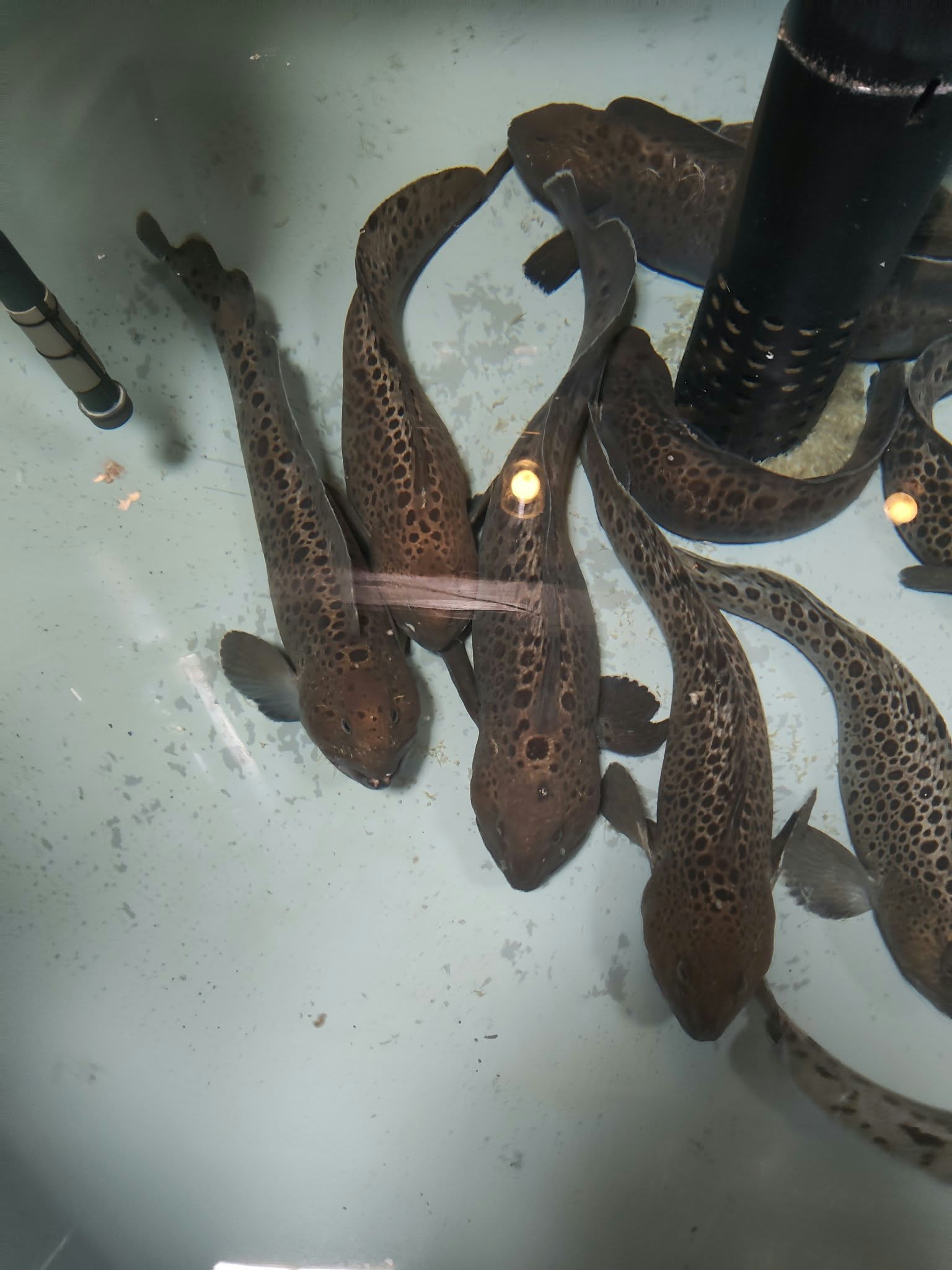
Trials with spotted wolffish (Anarhichas minor) as a farmed fish began in Norway in 1996. Canada followed from 2000, and in Iceland a subsidiary of Síldarvinnslan, Hlýri ehf, ran trials from 2001–2006 before stopping after a Kudoa islandica infection. Across programs, the same bottlenecks returned: egg quality, low fertilization rates, and poor survival in early larval feeding.
Ranked among the strongest new aquaculture candidates
In January 2020, Akvaplan-niva published a Norwegian knowledge base on new aquaculture species (Kunnskapsgrunnlag for nye arter i oppdrett). One of its main conclusions: spotted wolffish ranks among the species with the greatest near-term potential in the Norwegian farming environment — ahead of halibut, cod, turbot, and Arctic charr, and behind only scallop in that assessment.
Arctic Spotfish begins, 2023
Arctic Spotfish ehf started operations in 2023 with support from NORA. Because no spotted wolffish broodstock existed in Iceland, fish were collected from the wild through collaboration with longliners and trawlers. The first fish arrived ashore in October 2023 and were held in 3-metre circular tanks at the Marine and Freshwater Research Institute facility at Stadur near Grindavik, where they were weaned onto dry feed alongside capelin and farmed cod from the station.
Breakthrough spawning and hatch, 2024
On 9 November 2024 the first female spawned; a male was found ready with milt. When a second female spawned on 16 November, the same male was used. Fertilization reached about 90% for the first batch and 60% for the second. Eggs were large — 6.6 and 6.4 mm — comparable to salmon eggs. After removing dead eggs, hatching began around 800 degree-days (earlier than the 900–950 often cited), and larvae carried a small yolk sac.
Start-feeding that finally works
Days after hatch, larvae received live Artemia mixed with dry feed. Of roughly 16,000 individuals that hatched, more than 10,000 survived start-feeding — over 60% on the first attempt. That result rested on unpublished institute experience with wolffish species care and start-feeding, shared once collaboration began. Combined with the species’ strong immune system and grow-out mortality under 1%, the practical barriers to farming spotted wolffish no longer look insurmountable.
Grants and the road to Þorlákshöfn
Arctic Spotfish has received two grants: NORA support to assess establishing production in Iceland and transfer knowledge from Norway, and a Rannis grant to map spotted wolffish genetics in preparation for future breeding. The company plans to build a juvenile hatchery in Þorlákshöfn and has secured facilities for that work.